


How Audi Created a $1.2B F1 Fortress with Sovereign Cash
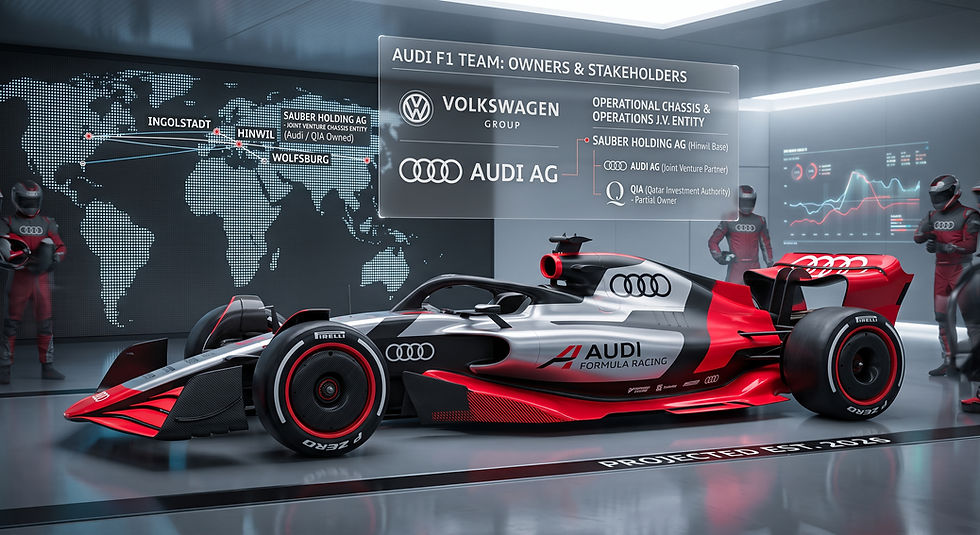
In 2024, the Sauber Formula 1 team crossed the finish line in dead last, scoring a meager four points all season. In any ordinary market, a team that uncompetitive might have created a desperate fire sale. Instead, it fetched an astonishing $1.2 billion valuation—and Qatar’s sovereign wealth fund wrote a $360 million check to join. Behind this apparent paradox lies one of the sharpest corporate chess moves in modern motorsport. While Volkswagen Group battled union revolts and threatened domestic factory closures at home, Audi quietly exploited Formula 1’s closed-shop franchise economics and tapped sovereign equity to construct a shield around its balance sheet. Here is how they pulled it off.
At first glance, sports investments of this scale are often conflated with high-profile brand marketing or speculative trophy-asset acquisitions. However, an analytical examination of the transaction reveals a far more calculated corporate strategy: the deliberate deployment of external sovereign equity as an industrial balance-sheet shield. Specifically, Audi’s transaction with Qatar Investment Authority (QIA) accomplishes three vital corporate imperatives:
It capitalizes on unprecedented franchise scarcity values engineered by Formula 1’s regulatory framework, unlocking institutional liquidity despite trailing on-track performance.
It executes a legally segregated capital ring-fence that guarantees long-term operational and capital expenditure (Capex) modernization at the team’s Hinwil, Switzerland facility, immunizing the racing outfit against parent-company budget freezes.
It aligns major shareholder voting blocs across the multi-tiered governance structure of Volkswagen AG during an acute industrial downturn, establishing a modern template for syndicated OEM co-ownership that replaces unhedged balance-sheet exposure.
Franchise Scarcity and the $1.2 Billion Floor
To understand the financial viability of QIA’s entry, one must first dismantle the prevailing valuation mechanics of premier motorsport assets. Historically, backmarker Formula 1 operations were financial liabilities. Struggling outfits with high burn rates routinely slipped into administration or were divested for nominal sums—famously changing hands for as little as UK£1, or trading at sub-$200 million valuations, such as Dorilton Capital's acquisition of Williams Grand Prix Engineering (The Race, January 11, 2023).
The Sauber transaction marks a definitive structural decoupling of enterprise valuation from trailing sporting performance and book-value liquidation metrics. During the 2024 FIA Formula 1 World Championship, Kick Sauber posted an uncompetitive campaign, failing to score a single point through the opening 22 Grands Prix before salvaging four points at the Qatar Grand Prix, finishing 10th and last in the Constructors’ Championship. Under historical market conditions, an outfit coming off a last-place finish with four points would face solvency crises or severe valuation haircuts.
Instead, independent industry valuations appraised Sauber at an enterprise value of $1.2 billion, benchmarked directly against QIA’s $360 million cash commitment for a ~30% holding (BlackBook Motorsport, December 2, 2024). Revenue multiples across the grid have correspondingly expanded to approximately 6.0x (SportsPro Media, January 2026).
This multi-billion-dollar floor is sustained by three structural regulatory pillars established under modern Concorde Agreements and FIA governing statutes:
The Absolute Grid Supply Ceiling
The commercial rights holder and incumbent teams enforce a strict 11-team supply cap. Because open entry is barred without collective commercial consent, prospective entrants cannot simply register and build a grid presence organically. Formula 1 has evolved into a closed-system franchise league akin to the NFL or NBA, where scarcity dictates base pricing.
The Concorde Anti-Dilution Framework
Under the 2021–2025 Concorde Agreement, any prospective new constructor was mandated to pay an initial $200 million anti-dilution fee, distributed equally ($20 million apiece) to incumbent teams to offset prize-fund dilution over five seasons (Autoweek, February 2, 2023). However, as sport revenues and commercial rights expanded, this $200 million buffer provided only roughly two seasons of dilution protection by 2023 (Secretariat, February 2024).
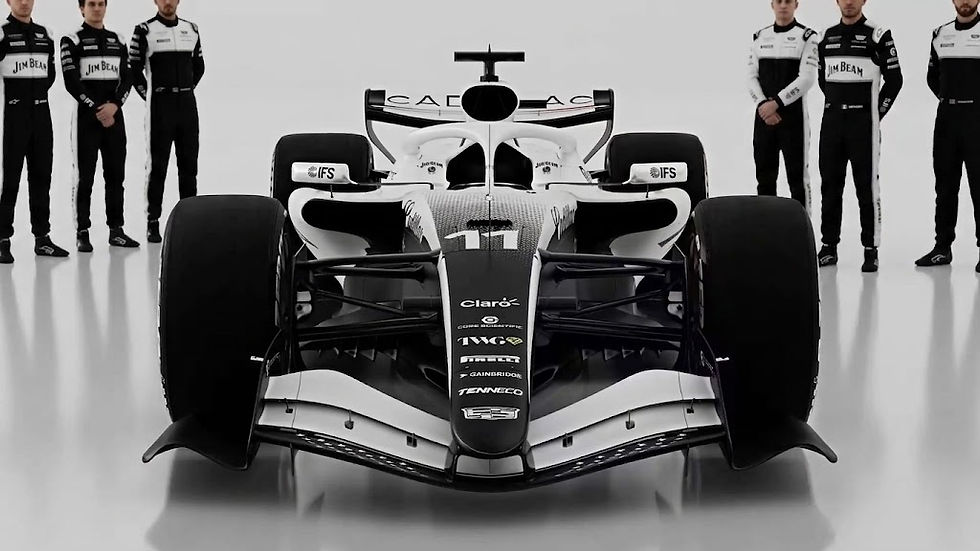
For the post-2026 era, incumbents pushed for barriers between $600 million and $700 million, while incoming entrant Cadillac/General Motors negotiated an anti-dilution fee verified at $450 million (BlackBook Motorsport, March 2025). Because an incoming group must disperse at least $450 million merely to unlock entry rights—before constructing wind tunnels, hiring engineers, or designing a chassis—acquiring an existing, operational constructor at a $1.2 billion valuation represents an economically logical alternative. The buyer secures established intellectual property, trackside telemetry, advanced simulation tools, cleanrooms, and guaranteed prize-distribution eligibility from day one.
Operational Cost Caps
The introduction of the FIA Financial Regulations, which initiated a base operational cost cap of $135 million (escalating to $215 million under expanded perimeters and indexation for 2026), systematically halted unlimited OEM spending wars where factory efforts burned $400 million to $500 million annually. By eliminating endless cash outlays, the cost cap transformed motorsport franchises into cash-flow-positive businesses, insulating margin profiles and sustaining valuation multiples.
Legal Structuring and Hinwil Capital Ring-Fencing
The strategic elegance of the Audi-QIA partnership lies in its corporate and legal architecture. When multinational corporations encounter severe macroeconomic strain, specialized subsidiaries are often vulnerable to sudden capital reallocation or budget clawbacks. To prevent this, Audi structured a targeted primary capital injection.
The overall motorsport program was bifurcated across two legally and geographically distinct operating entities:
Audi Formula Racing GmbH (Neuburg an der Donau, Germany): The dedicated German powertrain entity tasked with the design, testing, and manufacturing of Audi’s bespoke 2026 hybrid power unit (Audi MediaCenter, November 29, 2024). Crucially, this entity was entirely excluded from the transaction perimeter and remains 100% owned by Audi (PlanetF1, November 29, 2024).
Sauber Holding AG (Hinwil, Switzerland): The chassis engineering, aerodynamic development, manufacturing, and track-operations entity, which served as the exclusive target for QIA's equity purchase (QIA Newsroom, November 29, 2024).
The Mechanics of the Full Buyout and Primary Injection
The timeline of this dual-track structure originated in an internal strategic review conducted in October 2023 by Audi Chief Executive Officer Gernot Döllner (The Race, November 29, 2024). Audi had initially contracted with former Sauber owner Finn Rausing to acquire an initial 75% majority stake by late 2026 for an estimated €450 million (The Race, November 29, 2024).
However, to accommodate external sovereign capital without cumbersome three-way shareholder frictions, Audi accelerated its schedule. In January 2025, Audi officially completed the full 100% takeover of Sauber Holding AG from Rausing for a reported total sum of €600 million to €650 million (Sports Illustrated / PlanetF1, January 18, 2025). As confirmed by an AUDI AG spokesperson:
"Closing was concluded in January, as planned. Audi now is the 100 per cent owner of Sauber Holding AG, the mother company of the team" (Sports Illustrated / PlanetF1, January 18, 2025).
Consolidating 100% ownership onto Audi’s balance sheet was a prerequisite for structuring the subsequent QIA entry. CEO Gernot Döllner explained the corporate logic:
"The original contract with the previous owner of Sauber was to become a 75% investor by the end of '26. And to go the way we now completed today it was necessary to take Sauber 100% on our books first, and then being able to - not resell, but to go by a capital injection and bring money to the project. That was an integral part of that strategy" (The Race, November 29, 2024).
Structuring QIA’s participation as a primary capital injection directly into Sauber Holding AG rather than a secondary share sale meant that the estimated $360 million did not flow upstream as cash dividends to Audi or Volkswagen Group corporate coffers. Instead, the funds were legally ring-fenced within the Swiss operating entity to underwrite facility modernization, including cleanrooms, driver-in-the-loop simulators, high-performance computing clusters, and the expansion of the technology satellite in Bicester, UK.
To ensure fiduciary alignment, QIA secured direct governance representation with a seat on the Supervisory Board of Sauber Motorsport AG (PlanetF1, November 29, 2024). This structural ring-fencing guarantees that Hinwil's multi-year capital budget cannot be cannibalized or frozen by corporate austerity measures in Germany.
Shareholder Alignment and German Supervisory Board Governance
The corporate timing of the QIA transaction coincided with one of the most tumultuous fiscal climates in Volkswagen Group’s modern history. In late 2024, Volkswagen Group reported a 42% collapse in third-quarter operating profits, forcing CFO Arno Antlitz to outline sweeping cost-cutting initiatives, evaluate domestic German factory closures, and propose 10% wage reductions across unionized workforces (BlackBook Motorsport, December 2, 2024; Motor1 / Reuters, October 2024).
Under the German system of co-determination (Mitbestimmung), capital deployment of this magnitude faces extensive oversight. Half of the seats on the Supervisory Boards of Volkswagen AG and AUDI AG are occupied by employee representatives and trade union leadership, headed by Daniela Cavallo (Chair of the General Works Council of Volkswagen Group) and Jörg Schlagbauer (Chairman of the General Works Council of AUDI AG) (Volkswagen Group, 2025). In an environment where production lines and domestic plants faced potential closure, committing hundreds of millions of euros to a Formula 1 racing operation could have generated significant labor unrest.
Rather than circumventing governance, the transaction methodically leveraged existing shareholder alignments. The supervisory boards of both Volkswagen AG and AUDI AG met on March 8, 2024, to formally authorize the complete takeover of Sauber (Audi MediaCenter, March 8, 2024). Manfred Döss, Chairman of the AUDI AG Supervisory Board, noted:
"The entry into Formula 1 is not only the pinnacle of Audi's very successful history in motorsport, but also as big a sporting challenge as it is a financial commitment. Through the bundling of Oliver Hoffmann's responsibilities and the complete takeover of the Sauber Group, we are accelerating our preparations for the 2026 season" (Audi MediaCenter, March 8, 2024).
Crucially, labor leadership backed the project. Jörg Schlagbauer remarked:
"Audi must remain technologically flexible, able to take action, and future-proof. To this end, we need a clear course" (Audi MediaCenter, March 8, 2024).
The participation of QIA as the minority partner was pivotal in maintaining this consensus. QIA is not an external, unknown financial sponsor; it is the third-largest shareholder in Volkswagen AG, holding a 17.0% voting interest and two permanent seats on the parent Supervisory Board, occupied by Dr. Hessa Sultan Al Jaber and QIA CEO Mansoor Bin Ebrahim Al-Mahmoud (Motorsport.com, November 10, 2024).
As Gernot Döllner summarized, the strategic vision was fully realized:
"The investment by QIA reflects the trust and confidence the Audi F1 Project has already garnered, underscoring Audi's unwavering commitment to the initiative. This additional capital will accelerate the team's growth and is yet another milestone on our long-term strategy" (Audi MediaCenter, November 29, 2024).
The Structural Shift: Eliminating Asymmetric Downside Risk
The strategic alignment between Audi and QIA illustrates a wider structural transformation across global automotive manufacturers: the phased retirement of the 100% sole OEM ownership model.
In historical eras of Formula 1, OEMs operated wholly owned subsidiaries funded directly by central treasury cash flows. Under this unhedged framework, an automotive brand absorbed total operational downside. If the team was uncompetitive, the parent company suffered brand erosion while writing off hundreds of millions in operational deficits. Furthermore, if economic headwinds struck the core commercial auto business, public and supervisory pressures often forced sudden, distressed fire sales—often offloading valuable intellectual property for nominal values.
To eliminate this asymmetric exposure, modern OEMs have turned to syndicated co-ownership architectures:
The Mercedes-Benz Model
Mercedes-Benz AG dismantled its wholly owned corporate racing structure, establishing an equal tripartite joint venture for Mercedes-Benz Grand Prix Ltd, divided equally (33.3% each) among Mercedes-Benz Group, INEOS, and Team Principal Toto Wolff (Motorsport.com, 2025/2026). This shift transformed the operation into a self-sustaining commercial enterprise. In the 2024 financial year, the team reported £636 million ($858 million) in gross revenues and £120.3 million ($161 million) in net operating profit, achieving private market valuation benchmarks of $6.0 billion (Motorsport.com, 2025/2026).
The Alpine / Renault Reorganization
In June 2023, Renault Group syndicated a 24% minority interest in Alpine Racing Ltd to an investment consortium consisting of Otro Capital, RedBird Capital Partners, and Maximum Effort Investments for €200 million ($218 million), setting an enterprise valuation of $900 million (Alpine Cars Media, June 26, 2023). When competitive results lagged, Renault Group CEO Luca de Meo exercised fiscal discipline by decommissioning the costly internal works engine program at Viry-Châtillon ahead of 2026, transitioning Alpine to a customer engine supply arrangement with Mercedes-Benz (Motorsport.com, July 12, 2025).
De Meo underscored the severe balance-sheet disparity driving the decision: customer engines demand an estimated €20 million annually, whereas internal power-unit development burns upwards of €250 million annually (Motorsport.com, July 12, 2025).
Dimension | Legacy Sole-Ownership Model (Pre-2021) | Syndicated Co-Ownership Model (Audi/QIA, Mercedes, Alpine) |
Balance-Sheet Impact | 100% corporate cash burn ($400M–$500M annual operational outlays) | Shared equity capital; operations self-funded via cash flow and investor injections |
Capital Expenditure | Dependent on parent-company budget cycles; subject to corporate spending freezes | Ring-fenced at subsidiary level; multi-year Capex insulated from parent earnings shocks |
Corporate Governance | High exposure to shareholder revolt and labor union pushback during auto downcycles | Pre-aligned via co-investor syndication (e.g., anchor sovereign funds or institutional partners) |
Downside Brand Exposure | Operational failure directly diminishes core corporate enterprise reputation | Risk syndicated among commercial co-owners; enterprise value anchored by franchise scarcity |
Divestment Optionality | Historically executed under distressed conditions for nominal consideration | Co-investor provides natural liquidity, valuation validation, or buyout pathways |
Audi's partnership with QIA integrates these industry insights. By divesting an estimated 30% holding while retaining operational control and powertrain development, Audi protected its balance sheet, brought in an aligned institutional co-investor, and established an integrated exit or expansion counterparty should long-term corporate priorities shift.
Comparative Valuation and Industry Benchmarking
The economic rationale behind the Audi-Sauber transaction is reinforced when evaluated alongside comparable ownership profiles across Formula 1. The data demonstrates how structural regulatory protections have established high baseline valuations across the entire ten-team grid, irrespective of operational margins.
Constructor Entity | Ownership & Governance Structure |
Sauber Holding AG (Future Audi F1 Team) | AUDI AG (~70%), Qatar Investment Authority (~30%) |
Mercedes-Benz Grand Prix Ltd | Tripartite equal split: Mercedes-Benz AG (33.3%), INEOS (33.3%), Toto Wolff (33.3%) |
Alpine Racing Ltd (Renault Group) | Renault Group (76%), Otro Capital / RedBird / Maximum Effort (24%) |
Scuderia Ferrari (Ferrari N.V.) | Standalone publicly listed luxury/racing subsidiary (100% Ferrari N.V.) |
Haas F1 Team (Haas Formula LLC) | Gene Haas (100% private individual ownership) |
The data confirms that Sauber's $1.2 billion valuation is consistent with grid-wide valuation floors. While top-tier outfits such as Ferrari and Mercedes-Benz trade at multiples approaching $5 billion to $6.5 billion due to global sponsorship monetization and sustained profitability, backmarker operations maintain a baseline valuation above $1.0 billion solely through regulatory scarcity and guaranteed commercial participation rights (Sportico / Crash.net).
The End of Sole Ownership: Engineering Financial Resilience Under Corporate Strain
The Qatar Investment Authority’s strategic investment in Sauber Holding AG represents a sophisticated case study in modern corporate risk syndication and industrial capital allocation.
Rather than exposing its corporate balance sheet to an unhedged racing program during a period of industrial transformation and corporate cost discipline, Audi successfully leveraged the financial mechanics of modern Formula 1. By monetizing franchise scarcity protections and high entry barriers, Audi established a $1.2 billion valuation for a backmarker operation.
Through primary equity structuring, Audi ring-fenced approximately $360 million of sovereign capital directly within its Swiss operating subsidiary, ensuring long-term funding for its technical infrastructure while keeping proprietary German engine development wholly in-house. Furthermore, partnering with an established 17% shareholder inside Volkswagen Group enabled management to secure supervisory board and union approval during a broader industrial downcycle.
For corporate strategists and automotive leaders, the Audi-QIA partnership confirms that sole-ownership factory models are giving way to syndicated structures. By sharing equity with long-term sovereign and private capital, industrial manufacturers can pursue premier engineering and brand initiatives while insulating their core corporate balance sheets from competitive volatility.
Additional articles on F1 Team Finances and Economics


Comments