


Outmaneuvering Michelin and Bridgestone: Inside Pirelli’s Fight for Formula One Exclusivity
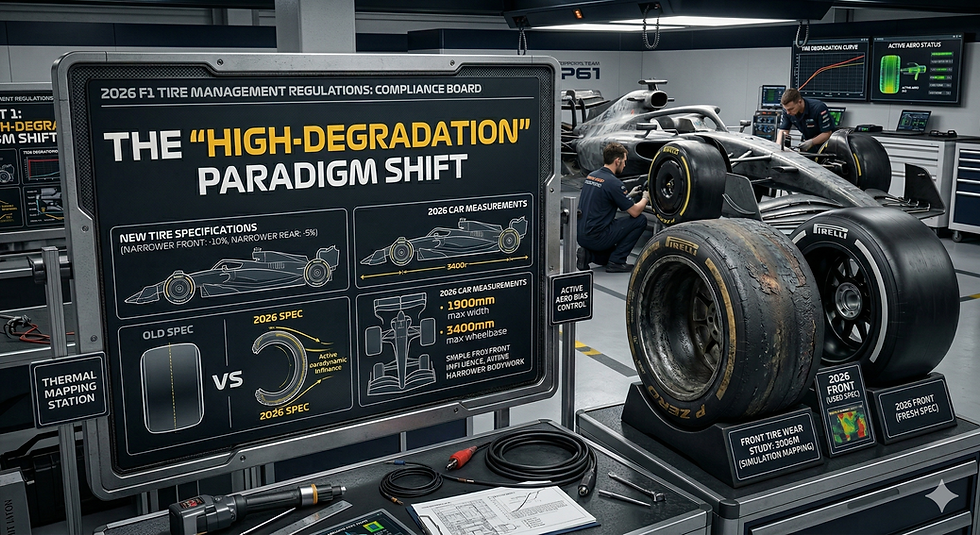
In the multi-billion dollar boardroom battle that is modern Formula One, ten fiercely competitive teams spend hundreds of millions to build the fastest machines on earth—yet their entire season rests on four small patches of rubber they are not allowed to choose. This exclusive tire monopoly is the prize of a cold-blooded corporate bidding war where technical brilliance is only half the entry fee; the rest is paid in massive commercial commitments and a willingness to engineer "high-degradation" products for the sake of television entertainment. From the strategic withdrawal of Michelin to the high-funded corporate assault by Bridgestone for the 2025–2027 contract, this analysis reveals the brutal economic logic behind why an Italian tire giant is willing to spend a fortune to defend its grip on the grid while pivoting toward a "Net Zero" future.
The Transition to a Single Supplier and Pirelli’s Strategic Ascent
To understand the current commercial landscape of Formula One, one must examine the pivotal regulatory shifts that occurred at the conclusion of the 2000s. The sport had previously been defined by a fierce, unrestricted development war between Bridgestone and Michelin, a period that drove tire performance to unprecedented, and arguably unsafe, extremes. In a bid to control escalating cornering speeds and reduce the astronomical costs associated with bespoke tire development, the Fédération Internationale de l'Automobile (FIA) mandated a single-supplier model. Bridgestone fulfilled this role exclusively from 2007 through the end of the 2010 season.
When Bridgestone announced its impending departure from the sport, Formula One Management (FOM) and the FIA were faced with the challenge of not only finding a new corporate partner but fundamentally redefining the purpose of the racing tire. The sport's promoters recognized that highly durable tires, while engineering marvels, often led to predictable, processional races with minimal strategic variance. Consequently, a new mandate was established: the incoming supplier would need to engineer tires specifically designed to degrade at an accelerated, predictable rate, forcing teams to execute multiple pit stops per race.
Pirelli viewed this mandate not as an engineering liability, but as a unique strategic opportunity to enter the world's most prestigious motorsport property. By agreeing to prioritize the entertainment metrics dictated by the sport's commercial rights holders over traditional durability metrics, Pirelli secured its position. The FIA World Motor Sport Council formally announced Pirelli as the single tire supplier for three years, beginning in 2011 (Pirelli, June 23, 2010). This initial three-year contract laid the foundation for a long-term partnership, demonstrating Pirelli's willingness to adapt its corporate engineering philosophy to serve the broader commercial and entertainment objectives of the Formula One enterprise.
Economic Impact on Formula One Teams: The Cost-Control Mandate
A primary justification for the FIA’s pivot to a single-supplier model was the theoretical management of operational expenditures across the grid, terminating the era of limitless, bespoke tire testing. However, regarding the precise economic impact of Pirelli being the only tire supplier for the Formula One teams, there is strictly no data available. The overarching commercial terms of the tire supply agreement, including any direct financial subsidies, raw material offsets, or specific cost allocations distributed to the ten individual constructors, are tightly sealed by Formula One Management (FOM).
Because the financial parameters of these corporate agreements are not publicly disclosed, assessing the exact comparative ROI for a specific team under Pirelli's monopoly versus previous multi-supplier eras is impossible based on verified documentation. The FIA World Motor Sport Council’s mandate simply confirmed Pirelli as the single supplier without releasing the underlying financial term sheets distributed to the grid. Therefore, while the overarching strategic intent was cost reduction by eliminating multi-brand testing budgets, no verified year-by-year milestones or executive financial disclosures exist in the research to quantify the specific economic benefit or detriment to the individual constructors operating under the Pirelli contract.
The 2020–2023 Tender: Technological Pivots and Michelin’s Cost-Benefit Analysis
As Pirelli established its operational rhythm throughout the 2010s, Formula One executives began charting a course for a massive regulatory overhaul intended to modernize the aesthetic and mechanical behavior of the cars. A central pillar of this impending overhaul was the transition away from the 13-inch wheel rims—a staple of Formula One for decades—to lower-profile 18-inch wheel rims. This change was highly anticipated by the automotive industry, as 18-inch rims are vastly more relevant to modern consumer road-car architectures, thereby improving the direct technology transfer and return on investment (ROI) for the tire manufacturer.
When the FIA opened the tender process for the 2020-2023 supply cycle, the transition to 18-inch rims was the defining technical challenge. The engineering requirements for such a shift were monumental. Pirelli confirmed the transition from 13-inch to 18-inch rims required a complete redesign of the tire carcass to handle reduced sidewall flex (Autoweek, December 21, 2021). The traditional 13-inch tires featured sidewalls that acted as a crucial component of the car's overall suspension system; removing that compliance required an entirely new structural philosophy to manage the extreme torque and aerodynamic loads generated by a modern Formula One car.
This transition period attracted serious interest from Michelin, a corporate titan with a storied history in motorsport and a strong strategic desire to showcase 18-inch tire technology. However, the specific timeline outlined in the FIA tender presented a profound economic and R&D dilemma. The contract stipulated that the winning manufacturer must supply the legacy 13-inch tires for the 2020 season before transitioning to the new 18-inch format for the 2021 season.
Ultimately, corporate pragmatism won out over the allure of the Formula One paddock. Michelin released a formal statement confirming it will not bid for the 2020-2023 tender (Racefans.net, August 31, 2018). The company's leadership explicitly stated that the requirement to build 13-inch tires for 2020 before switching to 18-inch tires in 2021 was an inefficient use of resources. Furthermore, Michelin remained philosophically opposed to the underlying mandate of manufacturing artificially high-degradation tires, preferring to focus their motorsport investments in series that rewarded absolute longevity and sustained peak performance. Because Michelin formally abstained from the bidding process, Pirelli faced zero immediate commercial disruption and retained its monopoly on the grid, successfully managing the complex transition to the 18-inch era.
The 2025–2027 Bidding War: Competitive Tendering and the Bridgestone Leverage
While Pirelli successfully navigated the 2020-2023 tender largely unchallenged, the subsequent bidding cycle for the 2025-2027 contract proved to be the most rigorous test of their Formula One tenure. As the sport experienced an unprecedented boom in global popularity—driven by expansions in the North American market, revised technical regulations, and highly successful digital media strategies—the commercial value of the exclusive tire supply contract skyrocketed. Recognizing this surge in brand equity, Bridgestone, the former sole supplier, mounted a comprehensive, highly funded, and formally recognized bid to reclaim its position at the pinnacle of motorsport.
The presence of a technically capable and financially robust competitor fundamentally altered the dynamics of the negotiation process. For Formula One Management (FOM), the re-entry of Bridgestone into the conversation provided immense strategic leverage. The bidding process was split into two distinct phases: a rigorous technical evaluation conducted by the FIA to ensure the manufacturer could safely meet the extreme engineering demands of the sport, followed by intensive commercial negotiations with FOM regarding financial commitments, trackside marketing, and global sponsorship activations.
Bridgestone proved to be a genuinely formidable threat to Pirelli's established infrastructure. The FIA formally verified that Bridgestone successfully passed the technical evaluation phase for the 2025-2027 tire tender, advancing them to commercial negotiations with FOM (Autosport, July 12, 2023). This critical milestone effectively eliminated any technical arguments Pirelli might have relied upon to maintain its exclusivity, shifting the battleground entirely to commercial value, corporate investment, and strategic alignment with the sport's future goals.
By cultivating a highly competitive environment featuring two global tire manufacturing giants, FOM was perfectly positioned to extract maximum corporate value. The ensuing commercial negotiations were notably intense, pushing both corporations to expand their initial proposals. Prominent motorsport publications reported that Pirelli executives faced a robust challenge from Bridgestone, which ultimately drove up the overall commercial value of the final agreement (Sky Sports, October 10, 2023). Pirelli was forced to significantly elevate its financial commitments and expand its activation strategies to defend its territory. In the end, Pirelli's established logistical infrastructure, deep institutional knowledge of the current aerodynamic era, and willingness to meet the newly elevated financial thresholds secured their position. F1 and the FIA officially announced that Pirelli had won the tender to remain the exclusive global tire partner from 2025 to 2027, with an explicit option for the 2028 season.
Future Regulatory Shifts, ESG Integration, and Sustainability Mandates
The successful acquisition of the 2025-2027 contract marks a distinct evolution in Pirelli's operational mandate within Formula One. While the early years of their tenure were defined by the pursuit of artificial degradation to enhance television entertainment, the future paradigm is deeply anchored in Environmental, Social, and Governance (ESG) principles. As global industries face increasing pressure to decarbonize their supply chains and adopt ethical sourcing models, Formula One has aggressively positioned itself to achieve a "Net Zero Carbon" footprint by 2030.
Consequently, the commercial demands placed upon Pirelli have expanded far beyond mere financial sponsorship and trackside performance; they now encompass stringent, globally recognized sustainability certifications. During the announcement of the contract extension, F1 CEO Stefano Domenicali publicly acknowledged Pirelli's enhanced financial commitments and the groundbreaking new mandate that all F1 tires will be Forest Stewardship Council (FSC) certified (Pirelli, October 10, 2023).
This FSC certification represents a monumental shift in the logistical and supply chain operations for a motorsport tire manufacturer. It requires Pirelli to implement rigorous tracking and auditing protocols to ensure that the natural rubber utilized in the production of the F1 tire compounds is sourced exclusively from responsibly managed plantations. These plantations must demonstrate adherence to strict environmental preservation standards, respect for the rights of indigenous populations, and the promotion of biodiversity. By embedding this requirement directly into the commercial tender, Formula One has effectively forced its technical partner to elevate its global corporate responsibility standards, utilizing the sport's massive platform to validate and promote sustainable supply chain management.
Pirelli was also required to adapt to the highly anticipated 2026 technical regulations. These regulations introduce revised power units with an increased reliance on electrical energy, alongside lighter, more aerodynamically agile chassis designs. Pirelli's R&D divisions must engineer compounds that can handle diverse torque deliveries while simultaneously adhering to the strict FSC supply chain mandates. The intersection of cutting-edge mechanical performance and verified environmental sustainability will define the next half-decade of tire engineering at the highest echelon of racing.
The "High-Degradation" Paradigm Shift
The trajectory of Pirelli as the exclusive tire supplier for the FIA Formula One World Championship is a study in corporate adaptability, strategic market positioning, and the aggressive defense of monopolistic commercial contracts. Pirelli’s initial selection in 2011 was predicated on their unique willingness to engineer artificial degradation, perfectly aligning their technical output with the immediate entertainment objectives of the sport's promoters. When faced with the massive architectural transition to 18-inch rims—a shift that fundamentally altered the economics of R&D and prompted Michelin's strategic withdrawal—Pirelli demonstrated the logistical resilience necessary to weather the transition unchallenged.
However, as the commercial value of Formula One reached historic highs, the 2025-2027 tender process proved that past performance does not guarantee future exclusivity. The robust, technically compliant challenge mounted by Bridgestone provided Formula One Management with immense negotiating leverage, forcing Pirelli to vastly increase its financial commitments to retain the contract. Moving forward, the relationship between Pirelli and Formula One will no longer be judged solely on lap times or pit stop strategies. With the implementation of mandatory Forest Stewardship Council (FSC) certifications, Pirelli's success will be inextricably linked to its ability to seamlessly fuse elite technical performance with verified, sustainable corporate governance. As the sport accelerates toward its Net Zero 2030 goals, Pirelli’s mandate has evolved from an entertainment enabler to a foundational partner in Formula One's sustainable future.
Additional articles on Tech & Innovation Partnerships


Comments