


How F1's Proposed 2031 V8 Engine Rules Could Cut Team Costs by 50%

The business of elite motorsport stands at a critical strategic inflection point. A regulatory proposal put forward by Federation Internationale de l'Automobile (FIA) President Mohammed Ben Sulayem to introduce an FIA-approved independent engine supplier starting in the 2031 season represents a major technical and political shift for Formula One. By transitioning from complex turbo-hybrid configurations to simpler, naturally aspirated V8 engines running on sustainable fuels, the FIA aims to significantly reduce engine design and procurement costs while stripping major automotive manufacturers of their political leverage over customer teams.
Formula One Chief Executive Officer Stefano Domenicali has supported the concept of a "white label" power unit to protect the series' grid stability against fluctuating manufacturer commercial interests (Motorsport.com). While this framework promises to democratize the grid and protect independent operators, its ultimate viability depends on a delicate economic trade-off: balancing substantial engineering savings against new operational logistics costs and potential performance disparities.
The 2026 F1 Engine Era
To understand the economic driving forces behind the 2031 proposal, the current state of Formula One's engine regulations must be examined. The 2026 season marks the implementation of a highly complex power unit formula characterized by a near 50:50 power split between the internal combustion engine and electrical hybrid components. In the opening rounds of the 2026 season, this formula has produced notable driveability and "super-clipping" issues, where drivers are forced to lift off on straightaways due to electrical energy depletion.
Efforts by the FIA to introduce a corrective hardware package for the 2027 season ran into immediate political resistance from incoming manufacturers, most notably Audi, whose explicit regulatory consent was contractually required to alter the engine rules (Motorsport.com). This tension highlights how heavily the current rules are shaped to appease original equipment manufacturers (OEMs), leaving the sport vulnerable to corporate veto points (Motor Sport Magazine).
The on-track competitive balance of the 2026 season further underscores the dominance of manufacturer-supported works operations over independent teams. As of July 2026, the constructors' championship standings show the works Mercedes AMG Petronas F1 Team leading with 333 points, followed by Scuderia Ferrari at 255 points, while customer teams such as McLaren (179 points), Alpine (60 points), Haas (21 points), and Williams (11 points) occupy lower positions.
The immense cost of developing and integrating these complex hybrid systems has essentially locked customer teams into an engineering asymmetry, where works teams retain optimized calibration setups and significant soft-power influence over their customers' technical configurations. This dynamic has prompted key stakeholders, including McLaren CEO Zak Brown, to voice concerns regarding team alliances, specifically citing the co-ownership of Red Bull Racing and Racing Bulls, as well as Mercedes' attempts to acquire a 24% equity stake in the Alpine team (Speedcafe).
Financial Advantages for F1 Teams
The primary financial benefit of an independent, FIA-selected engine supplier is the drastic reduction in power unit acquisition and development costs. President Mohammed Ben Sulayem stated that transitioning to a simplified V8 design would cut R&D budgets for engine production by approximately 50% compared to the current turbo-hybrid units (GPBlog). This technical simplification is achieved by stripping out highly complex energy recovery systems and bulky battery packs, shifting the electrification ratio down to the low double digits (between 10% and 15%). By eliminating these heavy electrical components and choosing between a turbocharger or a battery system, the FIA can target a 100kg total vehicle weight reduction, which directly lowers secondary design, material, and manufacturing costs for the chassis (GPBlog).
In addition to direct engineering savings, customer teams would gain substantial commercial and strategic autonomy. A standardized, neutral engine option, which F1 CEO Stefano Domenicali referred to as a "white label" power unit, would shield independent teams from the strategic instability associated with sudden manufacturer exits.
Lowering the financial and technical complexity of the engine also lowers the barrier of entry for large, independent outfits. For instance, Zak Brown indicated that McLaren would consider developing its own in-house power unit if the technical regulations made it financially viable—a path that is currently impossible due to the astronomical development costs of the turbo-hybrid era (Motorsport).
Potential Drawbacks for F1 Teams
Despite substantial savings in development, customer teams could face new operational and logistical financial burdens under the V8 regulatory framework. Naturally aspirated V8 engines are significantly less fuel-efficient than current turbo-hybrids, requiring a fuel tank capacity of roughly 200 liters (approximately 160kg of fuel) to complete a full race distance compared to the 105kg allowed under current rules (The Race). Since running a full race distance with a massive fuel tank would completely negate the FIA's targeted 100kg vehicle weight reduction, the governing body is studying the return of in-race refuelling, which was banned after the 2009 season.
Furthermore, independent teams risk locking themselves into a fixed competitive disadvantage without the technical and commercial support of a major automotive partner. If the independent "white label" engine's performance is strictly capped or frozen by the FIA to maintain parity, customer teams may find themselves unable to close performance gaps to factory works teams that possess advanced in-house optimization capabilities.
Independent teams would also lose the substantial commercial subsidies, marketing budgets, and engine integration assistance that works partnerships provide. Historically, relying on independent engines has proven economically precarious. The affordable Cosworth engine lured several new teams to the grid in 2010, yet the lack of manufacturer backing and performance parity contributed to most of those teams collapsing within a few years (Pitpass).
Benefits for Formula One and the FIA
For the FIA and Formula One, an independent engine supplier acts as an essential governance tool to neutralize the political influence of major car manufacturers. Under the current regulatory structure, works teams frequently leverage their engine supply contracts to coerce customer teams into voting in alignment on sporting, financial, and technical matters (F1i). This shift restores regulatory control to the FIA, allowing it to govern the sport in the interest of competition rather than the marketing goals of automotive company boards.
Commercially, the independent supplier model provides F1 with vital strategic contingency and grid stability. As Stefano Domenicali emphasized, a "white label" engine ensures the sport remains flexible and insulated from sudden, board-level decisions of major OEMs to terminate their F1 programs (Speedcafe). This regulatory buffer would prevent a situation where a sudden manufacturer exit leaves multiple customer teams without an engine supplier.
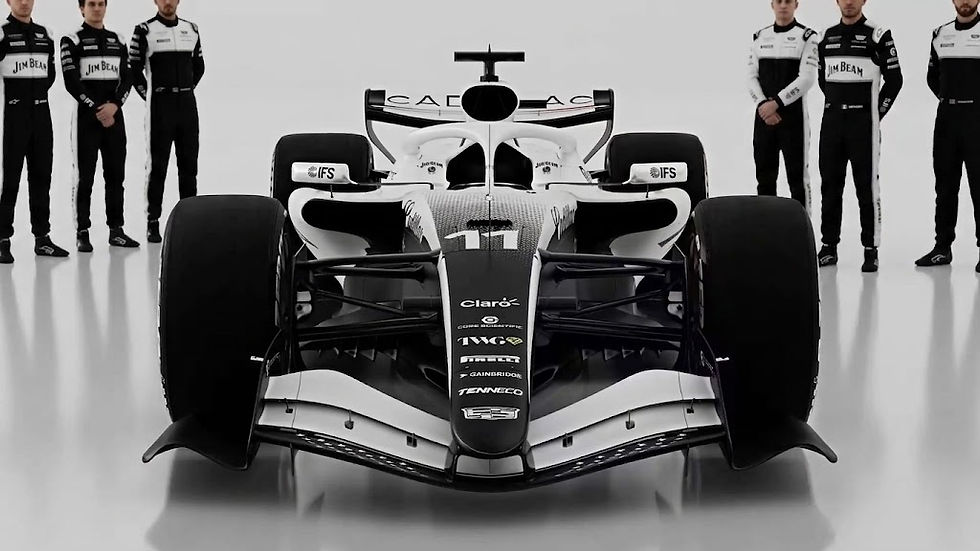
Additionally, simpler technical regulations make the sport highly attractive to incoming manufacturers that prefer traditional motorsport engineering over massive road-car electrification programs. For example, Cadillac, which is preparing to enter F1 as an engine builder in 2029, is known to be highly supportive of a transition to V8 power units, which could expand the sport's overall roster of engine manufacturers (Motorcyclesport).
Technical and Financial Comparison
The technical and financial parameters of the proposed 2031 regulations, as well as the technical status for active teams on the grid based on verified corporate statements, are detailed in the comparison tables below:
Table 1: Technical and Financial Comparison of Engine Regulations
Regulatory Parameter | Current V6 Turbo Hybrid Era (2026–2030) | Proposed Independent V8 Era (Post-2030 / 2031) | Projected Financial and Engineering Impact |
Engine Production R&D | High (Baseline) | Projected 50% Reduction | Cuts development costs by approximately 50% |
Electrification Ratio | Approximately 46% | Low double digits (10% to 15%) | Minimizes battery pack weight and complexity |
Target Vehicle Mass Limit | Heavy Hybrid Baseline | Target 100kg reduction (Target 630-650kg) | Improves safety and on-track agility |
Power Unit Manufacturer Unilateral Vote Power | Required for rule changes | Eliminated; FIA holds unilateral power for 2031 | Prevents manufacturer voting vetoes |
Who Controls the Grid? The Hard Financial Reality of F1’s Potential V8 Gamble
The FIA’s proposed independent V8 engine framework for 2031 represents a plan to solve Formula One’s long-standing governance and cost crises. By lowering engine R&D budgets by 50% and stripping major manufacturers of their voting vetoes, the framework could restore sporting authority to the FIA and financial stability to customer teams.
However, introducing a less efficient engine format could bring back in-race refuelling, increasing per year in logistics and equipment under the cost cap. Additionally, independent teams risk being isolated from crucial technical partnerships with major automotive manufacturers. Ultimately, the success of this proposal depends on the FIA's ability to source a reliable, high-performance independent engine supplier while keeping customer operations affordable and engine manufacturers interested in.
Additional articles on F1 Team Finances and Economics


keonhacai.cam hôm trước mình thấy bạn bè nhắc nên bấm vào xem thử cho biết thôi. Mình không ngồi đọc kỹ từng mục hay làm gì nhiều, chủ yếu coi giao diện có dễ nhìn không. Vào cái là thấy họ làm kiểu gọn gàng, chia khu vực rõ nên lướt qua cũng nắm được đại khái, không bị cảm giác chữ dồn sát nhau. Mình thích nhất là mấy chỗ hiển thị thông tin theo dạng bảng cột, nhìn khá thoáng và dễ quét mắt, không phải kéo qua kéo lại mới hiểu. Menu cũng để ngay chỗ dễ thấy nên chuyển qua lại nhanh, khỏi phải mò. Nói chung cảm giác dùng nhẹ nhàng, và mấy khối thông…
Bài viết rõ ràng, đọc xong thấy nắm tình hình dễ hơn, cảm ơn bạn đã chia sẻ. Mình được một người bạn gửi link bài này, tiện thể mình cũng hay xem thử mấy nền tảng giải trí trực tuyến họ bố trí giao diện thế nào, chủ yếu nhìn cách chia mục và hiển thị thông tin chứ không đào sâu nội dung. Mình gom lại vài ghi chú cho dễ tra, ai cần xem thì ghé https://topkif.nvinio.com/Soicauxsmbpro