


Zero Points, $400M in Losses, Yet Cadillac F1 Is Worth $3 Billion


Financier Mark Walter and TWG Global Holdings are actively exploring the sale of their controlling equity stake in the Cadillac Formula 1 team at a minimum enterprise valuation of $3.0 billion, according to Sportico (Sportico, November 2, 2026). The move comes as Walter accelerates a multi-asset liquidity realignment across his sports portfolio—including the recent $12.5 billion sale of the Los Angeles Lakers—while the team prepares for the 2027 completion of its 400,000-square-foot global race headquarters in Fishers, Indiana, and General Motors' proprietary 2028 works engine program.
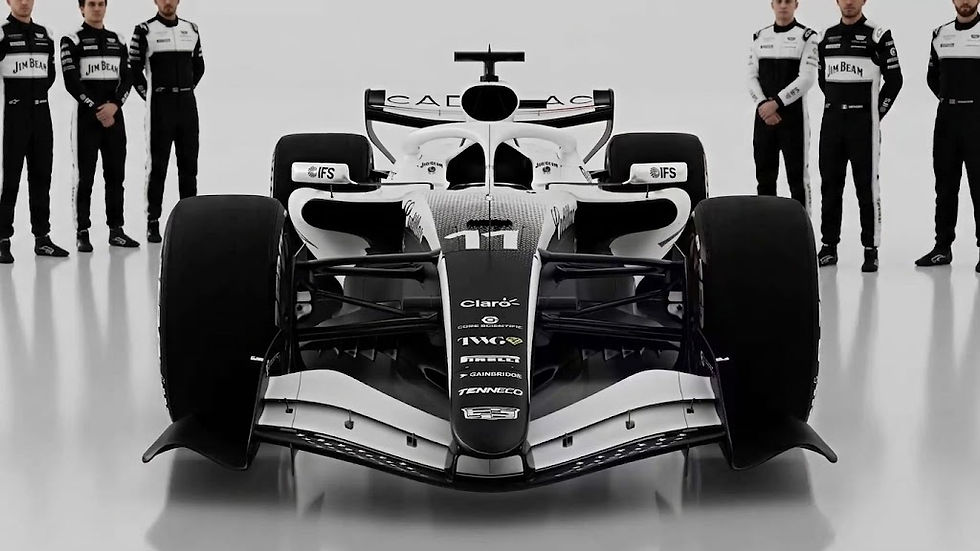
This exploratory market offering comes at an extraordinary juncture. Cadillac entered Formula 1 in March 2026 as the championship's eleventh constructor, marking the culmination of an arduous regulatory campaign initially launched under Andretti Global and subsequently reorganized under TWG Motorsports in partnership with General Motors. Across its inaugural 19 Grands Prix in the 2026 World Championship so far, Cadillac has recorded zero championship points, sitting anchored to the bottom of the World Constructors' Championship standings. Under historical motorsport economic frameworks, a nascent constructor facing competitive headwinds and absorbing hundreds of millions of dollars in first-year operational burn would face severe enterprise value contraction.
Yet, within the contemporary commercial architecture governed by the FIA Financial Regulations (the cost cap) and the commercial terms of the Concorde Agreement, traditional performance-based valuation paradigms no longer dictate franchise value. Instead, the reported $3.0 billion valuation underscores the total financialization and franchise scarcity of modern Grand Prix racing.
Portfolio Liquidity and Federal Inquiries: The Catalysts for Retrenchment
The exploration of a sale of TWG Global's controlling interest in Cadillac F1 cannot be viewed in isolation from Mark Walter’s broader institutional sports holdings. Rather than representing an isolated retreat from open-wheel racing, the potential transaction forms part of an aggressive capital realignment across Walter’s sports holding entities during the second half of 2026.
Over the course of 2026, Walter executed sweeping liquidity transactions across premium sports properties. In August 2026, an agreement was reached to sell his controlling interest in the National Basketball Association's Los Angeles Lakers to an investor consortium comprising Joshua Kushner and Bob Iger at an enterprise valuation of $12.5 billion, a transaction that finalized formal closing procedures in Florida on October 30, 2026 (ESPN, October 30, 2026). Shortly thereafter, in September 2026, Walter finalized the divestiture of his 12.83% equity interest in English Premier League club Chelsea FC to majority shareholder Clearlake Capital (The Esk, August 29, 2026). Concurrently, Walter made clear his intention to insulate his foundational baseball asset, confirming in an October 2026 interview with the California Post regarding the Los Angeles Dodgers: "We're going to keep the team [Los Angeles Dodgers] no matter what" (ESPN, October 28, 2026).
These capital redistributions coincide with a United States Department of Justice (DOJ) and the Securities and Exchange Commission (SEC) are conducting ongoing federal civil inquiries into intercompany financial arrangements and capital flows tied to life insurance carriers within Walter’s wider commercial network, including Delaware Life, Clear Spring Life and Annuity, and Group 1001/EquiTrust. In February 2026, grand jury subpoenas were served on Walter regarding these insurance asset management transactions (The Esk, August 29, 2026).
While TWG Global has categorically denied any wrongdoing regarding the insurance inquiries, and verified reporting confirms that the Formula 1 team itself has not been implicated in any federal investigation, the corporate imperative for structural liquidity and portfolio de-risking has intensified (F1 Chronicle, November 3, 2026).
On August 25–26, 2026, immediately following paddock speculation at the Dutch Grand Prix, TWG Global issued an explicit corporate statement: "TWG is not considering a sale of the Cadillac team or any other part of TWG Motorsport" (RACER, November 3, 2026). Less than ten weeks later, Sportico reported that Walter had retained advisors and was actively marketing the team at an enterprise valuation of at least $3.0 billion.
How Can a Backmarker Team Be Worth Billions?
The proposed transaction’s contradiction lies in the gap between Cadillac's immediate on-track performance and its prevailing market value. In its maiden 2026 campaign, Cadillac has endured substantial capital absorption without corresponding sporting dividends. Entering the championship required TWG and General Motors to provide a $450 million anti-dilution fee distributed among the incumbent ten constructors, followed by capital expenditure outlays exceeding $1.0 billion to construct racing infrastructure across North America and Europe (Coffee Corner Motorsport, November 3, 2026).
Furthermore, multiple sources report the outfit is absorbing an operating loss of approximately $400 million during its first year of operation. Across 19 Grands Prix so far, the team has captured zero championship points (The Times of India, November 2026).
Under the economic rules that governed motorsport prior to 2021, an asset with a $400 million annual operating deficit while sitting last in the championship would face steep market discounts. In 2026, however, an asking price of $3.0 billion reflects a structural shift toward franchise scarcity, cost-capped operating margins, and guaranteed commercial distributions.
Comparative Valuation Landscape
To assess the viability of a $3.0 billion enterprise valuation, Cadillac’s asking price must be contextualized within the broader Formula 1 valuation hierarchy. Sportico’s 2025 valuation audit assessed the average value of a Formula 1 team at $3.42 billion, marking a 48% annual expansion fueled by global media rights expansion and corporate hospitality licensing (Sportico, November 13, 2025).
Constructor / Entity | Enterprise Valuation (USD) | Variance vs. Cadillac Ask ($3.0B) |
Scuderia Ferrari | $6.40 Billion | +113.3% |
Mercedes-AMG F1 | $5.88 Billion | +96.0% |
McLaren Racing | $4.73 Billion | +57.7% |
Red Bull Racing | $4.32 Billion | +44.0% |
F1 Paddock Average (2025) | $3.42 Billion | +14.0% |
Cadillac F1 (Asking Price) | $3.00 Billion | Parity Baseline |
Aston Martin Aramco | $3.00 Billion | 0.0% |
Williams Racing | $2.14 Billion | -28.7% |
Alpine F1 Team | $2.08 Billion | -30.7% |
Racing Bulls | $2.05 Billion | -31.7% |
Audi / Kick Sauber | $1.88 Billion | -37.3% |
Haas F1 Team | $1.68 Billion | -44.0% |
The Multiplier on Anti-Dilution
As the data illustrates, a $3.0 billion transaction positions Cadillac at absolute valuation parity with Aston Martin, while establishing an $860 million valuation premium over Williams racing ($2.14 billion) and trading at nearly double the assessed enterprise value of the Haas F1 Team ($1.68 billion).
The premium commanded over Haas is particularly telling: Haas has operated in Formula 1 for a full decade, maintains established commercial partnerships, and regularly challenges for championship points. Yet Cadillac’s asset value commands a 78.5% premium over Haas. This spread demonstrates that the marketplace is pricing the structural barrier to entry itself.
New Infrastructure and a Future Engine
Under the 2026 commercial framework, acquiring an active constructor bypasses the protracted regulatory resistance of the FIA Expression of Interest process, eliminates multi-year delays in factory construction, and immediately unlocks commercial distribution rights under the Concorde Agreement. If Walter successfully executes a transaction at or above $3.0 billion, the trade establishes that an operational team commands a 6.6x multiple over its statutory $450 million anti-dilution fee in its very first season of existence.
Formula 1 Chief Executive Stefano Domenicali presaged this macro-financial shift during an executive summit, remarking on the structural change in team equity:
"Two years ago, when the new Concorde Agreement [was] signed [...] there was a number that was put on the Concorde Agreement. That was US$200 million, which seemed unreachable. There were teams in the past that were sold [for] UK£1. Now the market is offering almost billions to teams, and they are refusing that."— Stefano Domenicali, F1 CEO (SportsPro, June 15, 2023)
Governance Architecture and General Motors Continuity
A fundamental requirement for any institutional investor evaluating TWG Global’s interest is the corporate and operating governance structure of the racing outfit. Unlike traditional privately owned racing teams, Cadillac Formula 1 operates under a bifurcated international corporate structure involving private equity capital, a publicly listed original equipment manufacturer (OEM), and localized operating entities.
Cadillac F1 Governance Architecture & Corporate Breakdown
Corporate Entity / Tier | Equity & Control Level | Key Executive Leadership | Functional Mandate & Operational Infrastructure |
TWG Global Holdings, LLC | Controlling Parent Holding | Mark Walter (Controlling Principal) | Multi-franchise holding company; currently exploring divestiture of its controlling equity stake |
TWG Motorsports LLC | Holding Company for Racing Assets | Dan Towriss (CEO & 3% Equity Holder) | Direct holding vehicle overseeing Cadillac F1 and Spire Motorsports NASCAR operations |
TWG Cadillac Formula 1 Team Limited (UK) | British Operating Company | Mark Walter (Sole Person with Significant Control); Marcin Budkowski (Team Principal) | Legal licensee holding commercial entry rights; manages Silverstone engineering operations |
General Motors / Cadillac | Strategic OEM Equity Partner (Call Options up to 30%) | Mark Reuss (GM President); Russ O'Blenes (Powertrain Lead) | Technical brand anchor; holds equity conversion rights and operational board oversight |
GM Performance Power Units LLC | Powertrain Development Arm (100% GM Subsidiary) | Russ O'Blenes (CEO, GM Power Units) | Development and assembly of proprietary 2028/2029 works hybrid power units |
Distributed Engineering Network | Operational & Manufacturing Base | Nick Chester (Technical Director); Rob White (COO) |
|
Legal Control vs. Equity Rights
Public filings registered at the United Kingdom’s Companies House reveal that Mark Walter is designated as the sole active "ultimate controlling party" over TWG Cadillac Formula 1 Team Limited, the entity responsible for technical race operations, Silverstone engineering hubs, and Concorde licensing administration (TWG Cadillac Formula 1 Team Limited, Annual Report And Financial Statements For Year End December 2025).
Crucially, the franchise’s operational long-term value remains tied to General Motors. Public disclosures confirm that General Motors maintains a verified equity partnership that includes contractually protected call options, estimated by paddock commercial sources at up to 30% of total team equity (The Race,September 19, 2026). GM’s presence serves as the primary technical anchor for the enterprise.
The Detroit automotive giant continues to execute its long-term technological roadmap via GM Performance Power Units LLC, overseen by Chief Executive Russ O'Blenes. This dedicated powertrain division is advancing proprietary power units engineered to conform to FIA technical regulations for introduction in either the 2028 or 2029 season (The Race, 2024).
Furthermore, capital expenditure commitments toward physical infrastructure remain active. Construction is advancing on a 400,000-square-foot centralized global race headquarters located in Fishers, Indiana, scheduled for formal commissioning and delivery in early 2027 (Coffee Corner Motorsport, November 3, 2026). Any incoming controlling investor will enter a structural joint venture where General Motors is a long-term technical partner.
Executive Restructuring and Fixed Contractual Liabilities
The operational stability of the team was subjected to a significant corporate realignment in late summer 2026, well before Walter’s divestiture ambitions became public. In August 2026, founding team principal Graeme Lowdon—who had stewarded the bid through its protracted regulatory approvals—was removed from his post in a unilateral corporate intervention executed by Dan Towriss.
Towriss transparently articulated the governance rationale behind Lowdon’s abrupt termination:
"It was my decision; it wasn't a mutual decision. The process started a few months ago to explore what, really thinking about what the next phase for Cadillac Formula 1 looks like, what's the right timing." — Dan Towriss, CEO of TWG Motorsports (The Race, August 13, 2026)
Lowdon was replaced by Marcin Budkowski, the former executive director of the Alpine F1 Team and former head of the FIA single-seater technical department. Budkowski was entrusted with managing technical compliance, day-to-day operations, and cross-facility communication among Cadillac’s distributed hubs. Budkowski works alongside an established technical cabinet that includes Technical Director Nick Chester, Chief Operations Officer Rob White, and Executive Engineering Consultant Pat Symonds (The Race, 2025).
The Institutional Suitor: Strategic Capital vs. Paddock Speculation
Reporting by Sportico confirmed that at least seven distinct institutional investment entities have registered interest or initiated exploratory due diligence regarding Walter's controlling interest in Cadillac F1 (Grande Prêmio, November 2, 2026).
The arrival of established institutional sports conglomerates was corroborated by investigations conducted by The Wall Street Journal and The Guardian, which confirmed that Fenway Sports Group (FSG), directed by John Henry, has engaged in formal negotiations to acquire Walter’s controlling equity stake (The Wall Street Journal / Daily Downforce, November 2026).
Fenway Sports Group (FSG) Synergy & Cross-Asset Model
Conglomerate Asset / Holding | Sport / Market Segment | Equity Structure & Capital Profile |
Liverpool Football Club | English Premier League | Majority Ownership (divested ~38% stake to Bezos Consortium) |
Boston Red Sox | Major League Baseball | Flagship Asset / 100% Owned by FSG Partners |
Pittsburgh Penguins | National Hockey League | Majority Equity Holding |
RFK Racing | NASCAR Cup Series | Co-Ownership (Jack Roush, Fenway, Brad Keselowski) |
Spire Motorsports | NASCAR Cup Series | Controlled by TWG Global / Dan Towriss |
Cadillac Formula 1 Team | FIA Formula One World Championship | Prospective Controlling Equity Acquisition ($3.0B Valuation) |
The Strategic Rationale for Fenway Sports Group
FSG’s pursuit of the Cadillac F1 asset represents a natural step in its multi-club, cross-sport growth model. The conglomerate manages a diversified global sports portfolio featuring Major League Baseball’s Boston Red Sox, the NHL’s Pittsburgh Penguins, English Premier League powerhouse Liverpool FC, and NASCAR outfit RFK Racing (The Wall Street Journal / Daily Downforce, November 2026).
Crucially, FSG possesses immediate balance-sheet liquidity: the group recently secured substantial growth capital by divesting an approximate 38% minority equity stake in Liverpool FC to an investor consortium that included Jeff Bezos (The Guardian / Crash.net, November 2026).
Beyond capital reserves, an FSG transaction introduces direct commercial synergies across North American motorsport. Through its co-ownership of RFK Racing in the NASCAR Cup Series, an FSG investment in Cadillac F1 creates an operational bridge to TWG-controlled Spire Motorsports. This shared infrastructure would allow cross-promotional sponsorship bundling and shared technical fabrication facilities across stock car racing.
Paddock Rumors vs. Corroborated Capital
While FSG is confirmed as an active suitor, the corporate identities of Suitors 2 through 7 remain undisclosed. Paddock rumors and motorsport media had speculated on external interest from former Red Bull Racing team principal Christian Horner; however, verified sports business journalism confirms that Horner has made no formal bid.
Regulatory Consequences: The Death of the Greenfield Entry Model
The financial parameters surrounding the potential $3.0 billion transaction alter the regulatory mechanics governing future expansion of the Formula 1 grid.
Historically, prospective entrants could secure grid access by establishing a racing facility, demonstrating basic solvency, and obtaining technical ratification from the Federation Internationale de l'Automobile (FIA). The commercial modernization of the sport under Liberty Media replaced this ad-hoc model with statutory entry hurdles codified in the Concorde Agreement.
The Dilution Fee Escalation
Under the eighth Concorde Agreement (governing 2021 through 2025), new constructors were required to remit a statutory anti-dilution fee of $200 million. This figure was designed to indemnify incumbent constructors against immediate prize fund dilution.
However, as global interest in the sport surged, incumbent team principals contended that $200 million failed to compensate for enterprise value dilution. In protracted negotiations leading to Cadillac’s entry, existing teams successfully mandated that Cadillac remit a record $450 million anti-dilution fee for its 2026 admission.
Grid Dilution & Statutory Valuation Multiples
Despite this more than twofold increase to $450 million, incumbent team executives—led by Mercedes-AMG CEO Toto Wolff—argued that the sum was insufficient (AutoNext, 2026). If TWG Global successfully executes a controlling stake sale at or above $3.0 billion, incumbent teams will have concrete market proof that the incoming franchise captures an immediate multi-billion-dollar valuation premium upon crossing the entry threshold.
This dynamic supports the stance taken by Formula One Management (FOM). In September 2025, FOM CEO Stefano Domenicali stated unequivocally that the Formula 1 paddock has "no more room" for a twelfth outfit, arguing that any entry parameters must accurately reflect true commercial replacement value rather than discounted entry formulas (SportsPro, June 15, 2023; AutoNext, 2026).
Formula 1’s formal welcome of Cadillac had already set an elevated standard for manufacturer commitment:
"General Motors and Cadillac's commitment to this project is an important and positive demonstration of the evolution of our sport. We look forward to seeing the progress and growth of this application, certain of the full collaboration and support of all the parties involved."— Stefano Domenicali, F1 CEO (Sports Illustrated, November 26, 2024)
The Narrowing of the 12th Team Pathway
The governance standards established by FIA President Mohammed Ben Sulayem have further narrowed the aperture for any future twelfth team. Speaking at a business forum in Madrid, Ben Sulayem confirmed that the FIA would only consider opening a formal Expression of Interest process for an expansion slot if the applicant is a major global automotive manufacturer originating from key growth economies, specifically highlighting China (AutoNext, 2026).
However, the likelihood of a Chinese automotive giant pursuing a greenfield entry remains remote:
Chinese electric vehicle manufacturer BYD held exploratory briefings with motorsport intermediaries, but Executive Vice President Stella Li clarified the automaker’s position in July 2026, stating that "there is no project" and no concrete program to enter Formula 1 (AutoNext, 2026).
Furthermore, BYD special adviser Alfredo Altavilla confirmed that the company would not enter Formula 1 merely as a marketing sponsor without total technical and architectural alignment (AutoNext, 2026).
Because of these steep barriers, Ben Sulayem publicly advised prospective entrants to follow the precedent established by Audi: acquire an existing team rather than construct a new entity from scratch (AutoNext, 2026). Audi secured its 2026 factory entry by executing a multi-stage buyout of Swiss-based Sauber Motorsport.
Why Formula 1 Will Never Sell a Team for £1 Again
Mark Walter’s rumored $3 billion exit lays bare the central commercial reality of elite motorsport: Formula 1 is no longer in the racing business; it is in the scarcity business. By pairing an ironclad cost cap with guaranteed prize distributions and permanently barring new entrants from the paddock, Liberty Media accomplished what motorsport spent seventy volatile years failing to do—they made it impossible for an owner to go broke losing a Grand Prix. The era of romantic, grease-stained privateers gambling their family fortunes on a Sunday afternoon is over, replaced by private equity balance sheets and ten-figure floor values. On the modern grid, you can finish dead last, score zero points, burn hundreds of millions in operational red ink, and still walk away holding one of the most lucrative sovereign-scale investments in world sports.
Additional articles on F1 Team Finances and Economics

Comments